
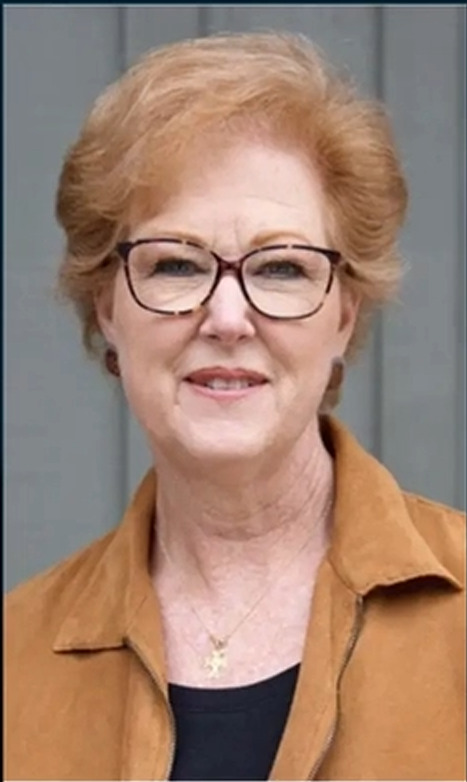
Nancy Lewis
- Name
- Nancy K. Lewis
- Year of Ordination
- 2013
- Item sets
- Women's Ordination - People
- Media
 Nancy Lewis photo.png
Nancy K. Lewis first felt the call to ministry when she was twelve years old. She was in a confirmation program at a congregational church in Chicago, founded after the Chicago Fire by thirteen different European people groups. The church was a place of great formation for her, and when she was in confirmation, she felt the call of God on her life. She went to her pastor, whom she dearly loved, and he, with an abundance of kindness, gently explained that women did not serve in pastorates but could serve as missionaries, lay leaders, and many other volunteer capacities within the church. This made perfect sense to Nancy because while she had seen a women missionary, she had never seen a woman pastor. Though she wrestled with this limitation, she committed to being a great servant of God in whatever context she could, and that is what she did.
After deciding that the call on her life was to be a special education teacher, Nancy pursued a joint degree in special education and elementary education. Nancy graduated a bit early from college, then went to grad school, and graduated with a Master’s in Educational Supervision at twenty-two years of age. When she did not receive offers for positions as a Principal or Special Education Director, she began to serve in her local church, where she remained for years.
When Nancy married Andy Lewis, they moved to the Western suburbs of Chicago. Their neighbors attended Hinsdale Covenant Church, and the Lewises soon attended with them. Nancy remembers that her first role was to serve lemonade for the children’s VBS, and from there it followed that she served on boards and supported the ministries of the congregation in other capacities.
Through the Paul Carlson Partnership, Nancy felt a direct call to the denomination because it aligned with her theology and her husband’s desire to be part of a deeply missional church. Nancy also saw people like Evelyn Johnson, who were serving in impactful ways in the Covenant and were respected as women. She continued serving in the church but felt there was more.
At the time she had two young children and was working in industry in a large company and traveling a lot, which was daunting. It was a multi-categorical, special education position, which allowed her to teach all kinds of children, providing a good pivot year.
The following year the two longtime preschool directors at Hinsdale Covenant both decided to retire. The pastor approached Nancy and asked if she would take the directorship of the school. She thought this was a ridiculous idea, but God thought otherwise. As it turns out, the school system shifted entrance dates to kindergarten, causing her daughter to be ineligible and need a third year of preschool, which the preschool didn’t have. Nancy decided to try to create a transitional kindergarten program, and reasoned that if they would let her create a program then she would serve as director for one year. She ended up staying for eight years and saw the preschool grow from forty children to over two hundred. During that time, God called Nancy to ministry again. She observed that there was no pastor to the preschool. The families were going through difficult life situations—kids with cancer, family deaths—and there was no one to reach out. So Nancy decided that she needed to help.
Nancy began taking seminary classes to equip her to minister to the families of her students. Next thing she knew, she had finished a degree and was commissioned by the ECC in 1996 in children and family ministry, under the ECC’s Department of Christian Education. Fran Anderson and Evelyn Johnson were formational in equipping Nancy to serve in the ECC as a strong woman. At the commissioning service, the newly commissioned ministers were asked if they were “open to call.” Although Nancy didn’t fully understand what that meant, assuming she would remain in the Chicago area, she felt open to whatever God would have her do.
To her incredible shock, God called her to a church—and called her far away. After interviewing with two West Coast churches, Nancy was called to First Covenant Church of Oakland, California—a church she would ultimately serve for twenty-four years. In the summer of 1997, she moved to Oakland without her family because her husband didn’t yet have a job. This was a season that was “incredible, and bitter, and stretching, and transformational” for Nancy.
When she first went to FCC, the congregation was seeking a children's pastor. Nancy felt strongly that this role could not only serve children because children don't come to church by themselves; they come with their families. She pushed First Covenant to agree to shape the ministry into a children and family ministry. After serving as Pastor of Children and Families, Nancy took the role of Pastor of Congregational Care. First Covenant was founded by Swedish immigrant families, and the sense of rootedness and family connection continued to run deep in the congregation. This resonated for Nancy, and her ministry as Pastor of Congregational Care became an extension of that ethos.
During this season, the congregation of First Covenant Church Oakland continued to expand ethnically and racially. Nancy loved being able to serve and learn from people of different cultures. She pursued intentional learning opportunities for intercultural growth and believes her training as a spiritual director was also crucial as she used her training of listening well, giving congregants opportunity to be heard and validated.
When Nancy came to First Covenant, Reverend Viji Cammauf, was the only person of color on the staff. Pastor Paul Wilson executed a vision for the church leadership reflecting the congregation, by expanding his staff to include Latine, Black, and Chinese-American pastors. At that point Nancy was the only woman on staff, as Pastor Viji had left to begin Little Flock. (Read the biography of Viji Nakka-Cammauf here.)
Paul Wilson’s intentionality was impactful in helping people of different cultures be represented at FCC. As a staff, it was both enriching and at times challenging as they learned to flex with each other, navigating multiple styles and histories of church leadership and practices. Nancy recalls the importance of listening, being open to learning about different cultures and ways of “doing church,” and not being afraid but instead seeking the richness in the process. The staff committed intentionally to these practices, and Pastor Paul was gifted in forming a sense of collegiality and friendship that enabled his staff to be honest with each other, ask one another questions rather than jumping to conclusions or assumptions.
Being accepted as a woman, and as a strong leader, has also had its shadow side for Nancy. When she first came to the First Covenant, Oakland, there were a few people who would get up and leave the sanctuary when she would speak—even to give an announcement or read Scripture—because they did not want to sit under a woman. That was extremely difficult. She had a few people who directly asked her not to call herself a pastor because they believed that was false on her part and offensive on theirs. Nancy struggled with how to serve these people, to not take offence and remain faithful to God’s call. She also felt a sense of responsibility toward the young women who would follow her—to the little girls and little boys in Sunday School who needed to see women’s leadership modeled in the church. Those challenges were always present, but God continued to affirm Nancy again and again. This was not always in the way she was seeking but often surprising doors that God opened.
One example of God’s affirmation of Nancy’s pastoral leadership, giftedness, and call was when Paul Wilson left FCC to serve as Superintendent of the Pacific Southwest Conference. The congregation was going through a difficult time and were hesitant to bring in someone new as an interim pastor. In discernment with the leadership, Nancy came up with the idea that three of the six pastors could form a transitional team to lead the congregation through that time. It was an unusual idea, but she felt strongly that God had given her this vision to foster a collaborative model of leadership. The other two pastors on the transitional team were younger men. They were stronger in preaching, but Nancy was stronger in having a long-term relationship with the congregation, administration, and caring for the staff. Pastor Nancy became the Transitional Lead, helping guide the congregation between Paul Wilson’s pastorate and welcoming and Pastor Marco Ambriz as the new Lead Pastor of FCC. (Pastor Marco had also served on the three-person transitional team.
Pastor Nancy retired in 2021 and continues to be active as a Spiritual Director and a Rooted.Growing.Resilient. coach. She believes strongly in the importance of Christians being exposed to women preaching—not only hearing their voices audibly but hearing women intellectually, the gifts they bring to the proclamation of the gospel by virtue of their God-given being. Though it is still not easy to be a woman in ministry, she is grateful that it is easier.
Sermons
Faithful Obedience – Redemptive Purposes (January 10, 2021)
Poets, Week 10 (March 21, 2021)
Let Love Define You (May 2, 2021)