
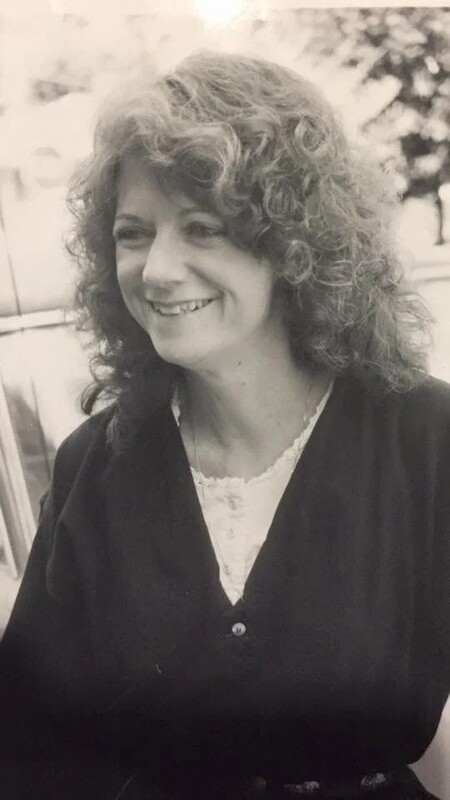
Sherron Hughes-Tremper
- Name
- Sherron Hughes-Tremper
- Year of Ordination
- 1978
- Item sets
- Women's Ordination - People
- Media
 Image.jpeg
Inauspicious events, when they intersect with willing Spirit-led hearts, can bring about the modest first steps of a revolution—and sometimes those mustard seeds of revolution are as imperceptible to the revolutionary as they are to the rest of the world. This seems especially to be true in the history of women’s rights. The women involved seldom take credit themselves, rather giving credit to those who have gone before, forging a chain of women historically linked by their questioning of the status quo, by their commitment to respond to God rather than to society’s expectations, and by their freedom from fear of scorn.
Two women who embody those traits and who successfully challenged the church’s many centuries of misunderstanding of what a “call to ministry” is and who can receive that call are Sherron Hughes-Tremper and Carol Shimmin Nordstrom, the first two women ordained by the Evangelical Covenant Church.
Thankfully, their stories, like their personalities, are dissimilar, thus destroying at the outset any preconceptions about the “type” of woman who would seek ordination or the ways in which people are led by the Spirit. Nonetheless, in addition to both possessing the traits above, their chief commonalities are their utter conviction about their “call”; the tenacity they both exerted in order to follow God’s call, and that in pursuing their calls, they both experienced the “roses by the wayside,” as well as the “thorns their stems contain.”
…
[Read Rev. Carol Shimmin-Nordstrom’s story, written by her husband, here as well as Sharon Cairns Mann’s full chapter “The Ordinands: Sherron Hughes-Tremper and Carol Shimmin Nordstrom,” through the Frisk Collection here.]
When Sherron gave her life to God at age twelve, she believed she was called to foreign missionary service. She purchased a Bible and studied it diligently throughout high school. She became a devoted disciple of the word, and spent as much time as possible with Pastor Lars A. Almquist, asking him questions about biblical passages she didn’t understand.
Sherron decided that joining the Peace Corps would be a good opportunity to test her call, without wasting God’s money. She also wanted to go to seminary prepared for what was ahead of her. To be eligible for the Peace Corps, she needed a college degree, so she attended Fresno State College (now University), and received a BA in history with a minor in Spanish. She was twenty-one years old when she joined the Peace Corps, and after training for three months in Puerto Rico, she served for two years in El Salvador. While there, Sherron lived in a hut with a dirt floor. Her experiences there as a community organizer led her to a lifelong passion for the poor and oppressed, and a fluency in Spanish that she still relies on to this day.
Upon completing her Peace Corps tour of duty, Sherron entered North Park Theological Seminary (NPTS) in the fall of 1969. She was one of three women, and the other two dropped out. She took the core Master of Divinity classes but also pursued the missions track. Much to her surprise, she was disappointed with the missions classes, but loved everything else, a fact that led to a change in her ministry goals.
She married her “soul mate,” Dale Tremper, near the end of her first year of seminary, and her path toward completing seminary became a twisting road. After several moves, a near-fatal pregnancy, several church calls for Dale, and two other attempts at finishing her graduate work at other schools, the couple returned to Chicago when Dale accepted a call to Douglas Park Covenant Church (now known as the Iglesia Pacto Evangelico Douglas Park). Sherron was finally able to return to the program she loved most: pursuing her MDiv at NPTS.
By this time, Sherron was four months pregnant. “Pregnancy was definitely a challenge in seminary that first quarter back. I did it all: had a baby, started a part-time internship after the baby came, did clinical pastoral education, took Greek and other seminary classes, commuted with the baby to NPTS. Was this hard? YES. It was very hard.”
Sherron has many anecdotes about the dismissive, demeaning attitudes of some of the professors and fellow students at NPTS. How was she able to persevere?
I would repeatedly tell all those who told me to go home that “Only God knows why I am here doing this—if I had a choice not to follow God, I wouldn’t follow, but I do not have a choice but to follow and God is ever present with me, holding my hand through all this.” There were many who criticized and doubted me, but I never did. I cried and was tired, but I felt the Lord’s complete leading in my life. I was called to have faith and carry on.
After graduating from NPTS, Sherron began chaplaincy work along with her colleague, Jay Friburg. The Central Conference Board and the Conference Ministerium asked Friburg to pursue ordination, which was a requirement to be a certified chaplain. They had done seminary, internship, and chaplaincy work in lock-step, so Friburg told Sherron he had been asked to pursue ordination and asked her, “Why was I asked and not you?”
Sherron pursued the question with the Conference Ministerium, and they invited her to a meeting at which she defended her right to be ordained. The ministerium then invited her to write her papers, which she did, and finally, after following all the procedures, Sherron was ordained in June 1978, along with her friend, Friburg, and with Carol Shimmin.
Sherron considers her first ministry position as her work as a Peace Corps volunteer in El Salvador from 1967 to 1969. Next she was employed in the Day Camp at Edgewater Covenant Church, Chicago; the Puerto Rican Community Center in Trenton, New Jersey; and with her husband at a Presbyterian church in Newark, New Jersey. While in Newark, Sherron was also a substitute school teacher in the Newark school system, and a social worker for an agency running groups for troubled teens and other community children.
While in seminary at North Park, Sherron was thrilled to land an internship at Douglas Park Church of the Brethren where she preached two sermons every Sunday: one in Spanish, then one in English.
Then she transitioned into chaplaincy work at the University of Chicago Hospitals; at the neonatal unit and obstetrics floor at Lutheran General Hospital in Park Ridge, Illinois; and at Rush Presbyterian St. Luke’s Hospital in Chicago. Sherron learned supervisory education and became a certified Clinical Pastoral Education (CPE) supervisor, and became chaplain and director of CPE at Arkansas Children’s Hospital in Little Rock, Arkansas. She was also director of CPE at Deaconess Hospital in Spokane, Washington. For a while, Sherron did counseling but returned to her work as CPE supervisor when she found a position at Presbyterian Hospital, later called Oklahoma University Medical Center, in Oklahoma City.
In spite of how well Sherron did in these roles, she still missed her first love: the church and the preaching. To her delight, she received a call to pastor two churches in Oklahoma at the same time, United Methodist Church in Spencer, and United Methodist Church in Nicoma Park, where she served for three and a half years.
Finally, she received a call to Epworth United Methodist Church in Oklahoma City. Sherron says,
This church is the niche I was looking for all my life. They are open and welcoming of women pastors —I am the third woman pastor in their ten- year history of being a “reconciling congregation” in the United Methodist Church. They love and accept diversity in all areas. I found “home” here, and for as long as I am their “Pastor Sherron” I know I am in the greatest place in the world. I have felt led all my life in whatever God had for me to do. And my hope is that it will be that way until I am 100 years old celebrating my birthday among my beloved children and their children and their children’s children singing, “Thanks to God for My Redeemer,” my favorite song.
At the same time that Sherron and Carol were trying faithfully to follow God’s call, the Covenant’s Board of Ministry was studying and discussing the issue of the ordination of women. Keith Fullerton recalls that they began this process as early as 1971 and spent many hours on the subject. “We were well aware as we moved forward with this policy,” says Fullerton, “that the Covenant was divided theologically on the issue, but the more we studied and discussed the subject the more we were convinced it was the right policy.”
Fullerton adds that:
Early on in our discussions we concluded that the policy of ordaining women should be approved before we actually had candidates to present to the Annual Meeting. It was also decided that if at all possible there should be at least two women candidates when the time came as we did not want policy and personality to get mixed in the struggle....The Board of Ministry, the seminary, and President Milton Engebretson worked hard, and sometimes under much criticism, to prepare the way.
It would be historical revisionism to imply that the church and seminary were always as supportive as they should have been during this process. While the denomination, the Board of Ministry, and the seminary are to be lauded for making the decision in 1976 to affirm the ordination of women, there were still many obstacles to the full acceptance of women in vocational ministry.
Today, both Carol and Sherron look back and see that the thorns of struggle are poignantly and irrevocably intertwined with the roses of ministry. Both women battled the hurt that was inflicted by prejudice and criticism on their road to ordination. Sherron concludes by saying, “Yes, there have been ‘roses by the wayside, thorns their stems contain,’ but God has never left me nor forsaken me. I feel there have been no ‘mistakes.’ I needed all my experiences to pastor this great church I am [currently] in.”
As happy as we may be that these two women now find themselves in satisfying positions of leadership, we must look beyond their current circumstances and ask what their pioneering efforts mean for the present-day church. Both women are too modest to say that they a made a significant contribution to the formation and development of the Evangelical Covenant Church.
But, putting their struggles in historical perspective, present-day observers can’t help but see that these two women didn’t just open a door—they opened a door of momentous consequence. They tested a new paradigm, and their tenacity in seeing it through helped to validate new assumptions: they validated the fact that women can lead, can be called by the Spirit to a life of service in vocational ministry, can succeed at seminary, and can have a “head” for theology. While they saw only their own steps through the fog of fatigue, we look back and see their steps as inspired, daring, and courageous. Frances Decker, recently writing about her own journey to ordination, says, “I am grateful for those young women of courage who battled the system and pursued their cause….Their persistence brought about change and for that I am grateful.” The church is finally responding to a biblical mandate. The church owes them the historical debt of recognizing that Sherron’s and Carol’s steps undid centuries of prejudice and opened the door of freedom for women to follow God’s call.
Frances Decker’s observation provides a fitting conclusion:
Ordination has also reminded me that I am so very fortunate to be living in this century and serving within this denomination that has recognized the gifts of women and affirmed them in their ministry. I am awed by the hundreds— yes, thousands—of saintly women throughout the ages just as sincerely called by God, for whom this has not been so. I am indebted to them. And I want to stand tall in their shoes.