
Evelyn M.R. Johnson
- Name
- Evelyn M.R. Johnson
- Year of Ordination
- 2000
- Item sets
- Women's Ordination - People
- Media
 Evelyn Johnson pic.jpg
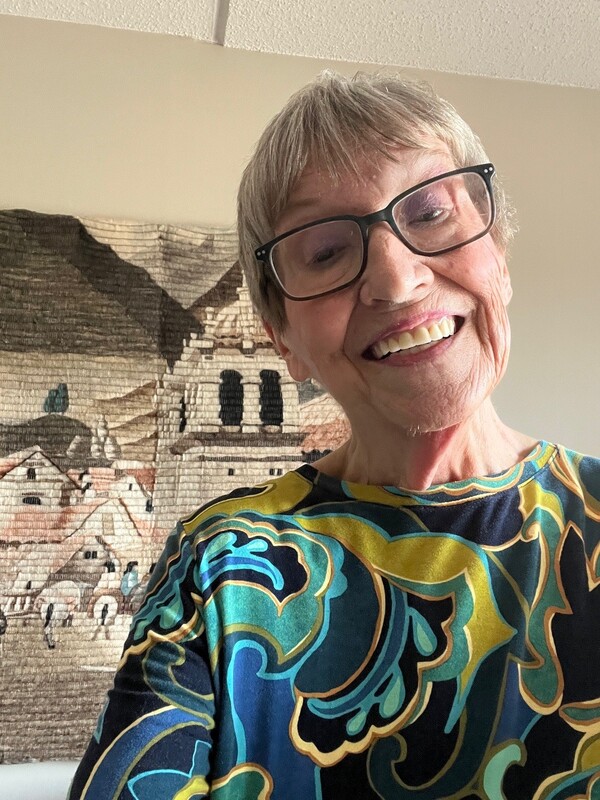
Evelyn Johnson was the first woman denominational administrator in the Covenant church for a department other than Covenant Women, and the first woman to be chosen as superintendent of a regional conference. God has used this phenomenally ordinary woman to do exceptionally extraordinary things in such a way that his kingdom vision is becoming more of a reality “on earth as it is in heaven.” She began with that end in mind.
Evelyn Marie Reed Johnson is a “Yes, yes!” woman. Her life has been a series of “yes” responses, resulting in ministry accomplishments that have undeniably brought (and continue to bring) God great glory! Her journey reveals significant milestones in her own life as they intersect with the life of the church, and those kairos, God-appointed moments have punctuated the sequential progression of Evelyn’s years, “for such a time as this.” Her numerous unplanned leadership positions were the results of acts of obedience for what God had planned, both for her and for his church.
The role of leadership didn’t just happen for Evelyn. Events, experiences, and relationships all played significantly in her ascent as a leader called by God. Her life can be viewed from a variety of perspectives: the stories of others who have been greatly influenced by her God-directed leadership, my own [86] observations of her mode, method, and model for ministry, and most importantly for me as one who is a product of God working through her to equip, empower, and enable me in leadership, and our subsequent soul friendship. Although I have taken a more chronological approach to tell the story, I hope you are able to glean those kairos moments in time when God seized the moment to make something special happen in and through Evelyn for the benefit of the church and building up the body of Christ.
In 1941 life in America changed for everyone. The United States entered World War II; the recruitment of women into the workforce heightened.
Evelyn Marie Reed was born to Thomas and Nita Reed. Raised on a farm near a small Nebraska town east of Lincoln, she was the youngest of four children, her mother from a Methodist home and her father from a Catholic/ Episcopal background. In this rural context, her early life was pretty typical for that time, consisting of education in a one-room schoolhouse, Sunday school in a rural (Methodist) church, and tending to chores related to the upkeep of the farm. A very special person for Evelyn during this time was her aunt, Alice Hall. Aunt Alice consistently encouraged Evelyn’s parents to get her to Sunday school, but she also modeled for her an important precept that perhaps meant little for a young person, but became a guiding principle that would follow Evelyn throughout her years of ministry: “Aunt Alice could do much with little. I’ll never forget that.”
The character of both parents was essential to shaping the character of this, their youngest child, each in their own way. Reflecting on her parents, she recalls, “My mother was such a quiet, wondrous model of so many things. Dad was my encourager.”
As she grew into adolescence and became the only child remaining at home, her father’s health began to decline, leaving her with increasing roles of responsibility on the farm. At twelve years old, she prided herself on driving the tractor for Dad, and even repairing a gas engine. She approached this huge task with confidence as she took on the role of learner under her dad’s watchful eye. Recalling her triumphal accomplishment with repairing the engine, she proudly states, “Although Dad wasn’t able to do the work anymore, he was always right there, teaching me how to fix it. And I did!” Evelyn also recalls something very important he told her: “You can be anything you want to be,” a fact that bears evidence in her life accomplishments. Her mother, although more reserved in her approach, modeled what it meant to be a pillar of strength with a spouse experiencing diminishing physical capabilities. Her creativity, commitment to excellence, and attention to detail continues to be a source of inspiration for Evelyn today.
As she graduated from high school, the hard decision she now faced was which college to attend. Others had begun to recognize special gifts in her as she taught Sunday school while just a high schooler herself. Meanwhile, her relationship with the pastor and his family grew. He also observed her ability [87] to teach and her leadership potential as well. He became a strong encourager, prompting her to consider a path toward becoming a director of religious education. At the same time, this gift of teaching had not gone unnoticed by the school superintendent, who also encouraged her to go into the teaching profession, but in a secular environment. It appears that Evelyn “split the difference” by entering Nebraska Wesleyan University, a Methodist school, and majoring in education.
Seemingly on the right track as a young adult, her world as she knew it began to unravel, thrusting her into a period of disorientation. Major events led to what she described as very traumatic years between the ages of eighteen and twenty-two. An explosion in tuition at the Methodist college made it unaffordable for her to continue there, leading her to drop out after that first year. Living in a boarding house, an increasing disillusionment with the institutional church, experiencing the death of her father in 1961, and being hospitalized herself in 1962 all deepened her dismay. Did she wonder if God had abandoned or forsaken her? Where was he now in this critical time of need? Was this a crisis of faith? Perhaps, yet even in the strangest of these circumstances, Evelyn affirms that her faith actually grew.
God had a plan—those kairos moments began to appear! In the midst of her world coming apart, God moments began to reshape and reorient her. Helen McHugh, an older distant cousin, stepped into her life and provided that much- needed physical space by allowing Evelyn to move in with her, a welcomed relief after her one-room, boarding house experience. Through Helen’s care and attentiveness to Evelyn’s needs, she became an adviser, a source of encouragement and a conduit of God’s love for a young woman in distress. Amazingly, funds became available for her to attend the University of Nebraska where she studied math and went on to teach it in junior high, high school, and college settings. Most critical to this new reorientation phase was her marriage to her life partner, Phil Johnson, a long-time family friend who had been an incredible source of care and support through her time of disorientation. Life was taking a turn for the better, and Evelyn knew that God did indeed have a plan.
All these experiences were crucial contributions preparing Evelyn to hear God’s call, and consequently readied her for a “yes” response. She was empowered by a father whose methods of teaching modeled Jesus’s own style—he told her what she needed to do, showed her how to do it, did it with her, and then allowed her to do it on her own; a mother who modeled unconditional love and strength; a pastor who helped her discern, discover, and develop her spiritual gifts; a cousin who welcomed her with the love of Christ; and a new husband whose love, care, and full support escorted her into this next phase of life. The attributes of God were made available to her through each of them, planting the seeds for the powerful way in which he could now work through her in mighty ways.
And the two became four. Two sons, Eric and Craig, were welcomed additions to the Johnson family. Phil, a member of Bethlehem Covenant Church near Waverly, Nebraska, and Evelyn, coming out of the Methodist tradition of her mother, made the decision to find a church that would blend their faith traditions. This decision led them to First Covenant Church in Lincoln, Nebraska. God intervened once again, capturing Evelyn’s attention through a pivotal event, one that created a significant blip on the scope of her spiritual journey. Her then five-year-old son, Eric, was used by God as the catalyst.
Pursuing a graduate degree coupled with the tasks of life left little time for commitment and involvement in the church. At the same time, Evelyn and Phil knew that their children needed to be in Sunday school. Eric, the eldest son, was dropped off one Sunday morning for Sunday school, only to find an empty classroom. Since his parents were not there, he decided to walk home and told them that “he wasn’t going if they didn’t go!” recalls family friend Vernamae Johnson. With Eric’s help, God was able to seize Evelyn’s attention, setting into motion her more intentional involvement in the life of the church. This began with teaching Sunday school and continued with participation in women’s ministry activities.
Key relationships began to develop, starting with her dear friend, Hildegard Person Patterson. Hildegard, whose father began the Covenant church in Kingsburg, California, many years ago, was a very wise and discerning woman. Hildegard also recognized something quite special in Evelyn and sought to help her to recognize it as well. It was through Hildegard’s mentorship, modeling, and encouragement that Evelyn was led to proclaim, “Yes, God. I am here. Forgive me for turning away. Show me your plan for my future.” Her “yes” response to God was now a rededication of her life to serve him!
This newly formed relationship between Evelyn and Hildegard was no ordinary friendship, but developed into a sacred companionship. As Evelyn noted from the traumatic twenty-something period of her life, “the absence of close relationships with Christian role models deterred my overall growth as a disciple at that time.” That would be the case no longer. God was providing the companions she would need for the journey before her, companions who would model the faith and challenge her in like fashion. Hanging on a wall in her home is a plaque that captures the essence of her feelings on intentional relationships: “Every experience God gives us, every person he puts in our lives, is the perfect preparation for the future that only he can see.” Hildegard turned out to be one such person whom God used to prepare her for that unknown future.
God didn’t stop with Hildegard. The next mentors entered into the Johnson lives in 1968 in the form of Barton and Vernamae Johnson. In this same year, Hildegard and Evelyn were busy creating the Christmas program for First Covenant of Lincoln, and they “took a chance on Barton,” Vernamae fondly remembers. As this new relationship blossomed, Evelyn and Barton began to develop and lead workshops for the Midwest Conference, but these were [89] no ordinary workshops. Putting their creative minds together, they did a bit of paradigm-shifting by introducing music (Jesus Christ, Superstar) in the workshop, very progressive and radical for the time, the rural context, and the Covenant church. Vernamae laughs as she recalled a member asking this dynamic duo, “Are you really Covenant?”
Further reflecting, Vernamae, when asked what she thought inspired her dear friend’s calling, immediately rattled off a host of accolades, pointing toward Evelyn’s holistic approach to ministry.
She was a trailblazer for women. She changed the way people thought about Christian education, from just Sunday school and youth groups to Christian education and formation for all ages. She even developed curriculum for senior adults. She paid (and pays) attention to those on the margins.
One such example is Aaron Johnson, the son of Barton and Vernamae and Evelyn’s godson. Aaron was chosen by Evelyn as one of two high schoolers to go with a mission group to Ecuador, which for him became the beginning of understanding the reality of people on the edges who needed his care. According to his mother, “Aaron wouldn’t be in ministry without Evelyn!” He now serves as co-pastor of a local congregation in Chicago.
Clearly, Evelyn and Barton had touched on a need within the Midwest Conference, and her leadership capabilities were becoming increasingly visible to others. As a result, a relationship with the conference began to take root and flourish. The conference tapped into her training skills and used her as a volunteer to help train leaders in the local churches with the creation of a “lab school” model. This eventually moved her into the role of director of Christian education for the conference from 1973–1981. Other roles included staff associate for the Covenant Department of Christian Education and chairperson of the Covenant Commission of Interchurch Relations. The Master’s plan was unfolding and becoming clearer as two paths—Evelyn’s and the ministry of the Midwest Conference—arrived at a common point of intersection.
Here in the Midwest Conference the model of a regional consultant ministry was developed, and later expanded into a denominational effort, serving the local churches. Taking to heart the directive to “equip God’s people for works of service,” God used Evelyn’s gifts and talents to contribute to the building up of the body of Christ (Ephesians 4:12). Phil, Evelyn’s soul mate, in reflecting on her journey, fondly recalls the conference superintendent’s words to her: “The problem with you is that you have more ideas than could possibly ever get done!”
If gender had been an issue before now. it never appeared to faze Evelyn. She simply served where God called. However, serving with Superintendent Warren Swanson in the Midwest Conference, she was put in positions “out front” that hadn’t been filled by a woman before.
From 1981 to 1985, Evelyn served as minister of education at Hillcrest Covenant Church in Prairie Village, Kansas. In 1985, Phil says, “Warren pushed for her to come back to the conference as the assistant to the superintendent.” And she did.
One month following her return, the sudden, devastating death of Warren thrust the conference into a state of shock. Evelyn now had to take the helm and lead as the first woman superintendent in the Covenant, even though it was only to be on an interim basis until a replacement could be found. (Was God allowing the church to get a glimpse of the future, a taste of what would come fifteen years later?) Without missing a beat, she served faithfully in this kairos moment, continuing the momentum of the conference.
“Yes, yes!” to God, she went from faithful volunteer to interim superintendent. God was “showing Evelyn his plan for her future,” just as she had implored of him seventeen years earlier. But he wasn’t quite done yet. “Well done, good and faithful servant! You have been faithful with a few things; I will put you in charge of many things” (Matthew 25:21). That “charge” came in the form of a new call to denominational leadership in 1986.
The beginning year of this phase was a historic moment in both the life of the church and in the life of Evelyn Johnson. The previous year, having served as vice-moderator for the 100th Annual Meeting proceedings, she was elected to lead the 101st Annual Meeting as the moderator. This historic moment, captured in the minutes of the 1985 Annual Meeting, read:
The moderator, Everett L. Wilson, presented the gavel to Evelyn M.R. Johnson, who will moderate the 1986 Annual Meeting, and commented that it was significant that the second century of Covenant history will commence with the first woman moderator.
As she stepped into this role, two major action items were on the agenda that could have a significant impact on her future. The first item was the election of the executive secretary of Christian education of which she stood as the nominee; the second was a change in the name of the department from Christian Education to Department of Christian Education and Discipleship (CE&D), with subsequent related changes. Two historic “first” moments—moderator and possible administrator—occurring simultaneously for this woman of God—to God be the glory!
Serving twelve years as executive secretary of CE&D, this trailblazer courageously entered new territory. One of her first tasks was to inform the director of the CE Resource Center, Millie Lungren, that the Board of CE&D had voted to close it. Motivated by the conviction that the overall resourcing services of the Covenant’s departments and commissions could be improved (and perhaps including her Aunt Alice’s principle of “doing more with little”), she pursued the concept of collaborative partnerships between six (and later seven) departments [91] and commissions. Evelyn envisioned a better way, which led to a better day with expanded services to churches through the ministry of the new Covenant Resource Center.
Paul Larsen, president of the Covenant during Evelyn’s tenure, continues to hold her in high esteem.
She reorganized the Department of Christian Education with an outstanding group of younger leaders whom she developed into even more outstanding leaders. She knew how to supervise others through empowering them. She could take almost any idea I suggested and turn it into a viable and successful venture. Perhaps her greatest contribution to the Covenant was her participation as a member of the “Dream Team”…composed of three people to develop a strategic plan for the entire denomination…Evelyn, North Park President David Horner, and Covenant Treasurer Dean Lundgren comprised the team. David was the “dreamer”—the creative and innovative idea leader. Dean had been a senior vice-president of the Hartford Company and had headed its strategic planning focus. He was disciplined and diligent in monitoring the process. But Evelyn was the “can do” leader. She would lead the process and design the structures of implementation.
At the conclusion of his service as president of the Covenant, he writes in his report, “I can genuinely state that the Covenant has never had a finer administrator than Evelyn Johnson.”
And the team continues to contribute to the positive direction of the Covenant. With the capacity to envision, organize, implement and review, she led her team to new endeavors, enhancements to existing ministries, and laid the foundations for others to build upon. Midwinter Conference, the continuing education event for Covenant clergy reached new heights; Covenant High in Christ (CHIC) was brought to a new level of “professionalism” and moved forward with an intentional push for diversity; 50+ ministries went to another level; improved Covenant Education Learning Labs (CELL) and established CE consulting ministries within the conferences; took responsibility for the care and support of staff ministers, including commissioning; laid the groundwork for Covenant External Orientation Program (CEOP); created Youth Pastors’ Connection, Covenant Mission Connection, Covenant Events Office, Covenant Vision to Action, and developed the Structuring for Mission Consultation, an event which laid the strategic groundwork for the revision of the denomination’s constitution—just to name a few! The teams and partners in ministry were critical for the tasks, and her gift of discernment for identifying the right people for the right responsibilities was instrumental in the new direction for Christian education. With her visionary leadership and God-given ability to discern the potential in others, she was able to coalesce and lead these dynamic leadership teams toward accomplishments that would last well beyond their service to CE&D.
God had shown and equipped Evelyn to live into that future that he had planned for her, but that future was still “not yet.” The year 1998 led her into a journey of “re-” words and changes were on the horizon. As she prepared to conclude her service as an administrator for the Covenant, she didn’t retire but began to rethink God’s next step in his continually unfolding plan for her life. He provided a short “rest stop” of sorts as Evelyn returned to local church ministry with Peninsula Covenant Church in Redwood City, California. Eight months into this call, she received a phone call asking if she would be open to considering a call as superintendent of the Pacific Southwest Conference (PSWC). Her response once again was a “yes,” although she knew there might be resistance, as the conference had few women in pastoral roles. Yet she was overwhelmingly elected and has led the conference into growth of outstanding proportions as they together live out the “vision to be a mosaic of churches working interdependently to reach the unchurched and equip believers to transform lives and communities.” As a result of Evelyn’s leadership and a team who reflects and represents the kingdom vision, the PSWC has flourished in its ethnic church planting and the promotion of issues of social justice and mercy. Churches and individuals are being challenged; young adults are being prepared and empowered to lead the church into its next phase.
This journey for Evelyn has been long and sometimes arduous, but through it all she has been unfazed as she has kept her sights on that “mental picture of a preferable future.” The heart of what she does and has done for the kingdom is not programmatic, not politically correct, and not aimed to please, but she does it because it is just the right thing to do. She lives in obedience to the call, however God fashions that for his purposes. “For such a time as this.” God has chosen her to help lead the way toward a more just and equitable society by immersing her into one of America’s most insidious, deeply entrenched, emotionally charged, and ignored issues—institutionalized and personal racism. As a self-sacrificing warrior, she has surrendered her way to God’s way, falling on her knees and praying while rolling up her sleeves to wrestle with America’s demon of racism—one person, one church, one regional conference, one denomination, one nation, one world at time. And that is how and why God intersected our journeys, hers and my own. I’ve given you the facts, but I am part of the proof of how God has used her to companion with others to help them see, hear, feel, taste, and live out the mission of Christ that is before us.
So this isn’t really the end but continues to be “a long obedience in the same direction.” Her life and her ministry—intentional, integrated, inclusive, and incarnational—is a persistent and consistent example of the Revelation vision still unfolding. I strongly suspect that her “Yes, yes” will never cease as long as she is able; there’s still much work to be done. As a living legend, her grandchildren can inhabit the history that their grandmother is making! To God be the glory, great things he has done!