
Catherine Gilliard
- Name
- Catherine Gilliard
- Year of Ordination
- 2012
- Item sets
- Women's Ordination - People
- Media
 Pic to use.jpeg
“Saying ‘Yes!’ means I’m in agreement with whatever God has planned,” Catherine reflects. “My unfolding journey in saying ‘Yes!’ to God’s call will be especially recognizable to clergy women, and specifically to ethnic clergy women.”
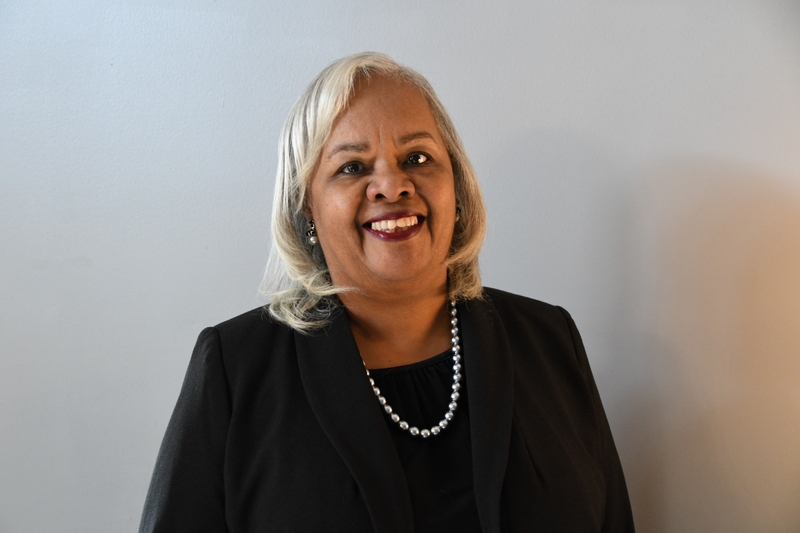
Born in Lawrence, Kansas in June of 1956, Catherine Reneé Williams Gilliard is the second of four children born to Wallace and Delories Williams. She was raised on the south side of Chicago during the civil rights era, when America was hemorrhaging because of gender injustice and systemic racist practices. Catherine represents the invisible voice in the Western world. She is a woman and is African American.
“It is difficult to explain how the pain I personally experienced in the late ’60s and early ’70s in this country is masked today by many of the people at the leadership table,” she freely admits. “I represent a part of Western history that most people in power would prefer to forget. And yet, my presence in leadership is a painful reminder to many in power of the women and people of color who still remain voiceless and unengaged.”
Around the age of nine, Catherine was transferred from her neighborhood black elementary school to a white elementary school. Her mother gave her consent for her nine-year-old to participate in a permissive transfer program, a [124] scenario which allowed selected students to be assigned to schools outside of the local school district. This is a common practice today for under-performing school districts. However, in the ’60s, the open prejudice and racist policies established and maintained by school administrators were allowed, and sometimes tacitly encouraged.
“It was a frightening and life-shaping experience for me,” says Catherine. “I was being pulled out of my community into a place where I was not wanted or respected. I was rejected, terrorized, and in the classroom, I was expected to be an authority on Africa.”
Each day, police officers turned their backs so they would not have to witness the rocks and other objects being thrown at the children who were being escorted to school by their parents. “If [the police] didn’t see it, it went unreported. Each afternoon, the nine of us accepted to go to this elementary school would run from the school to the bus stop.” Catherine’s mother, who also felt the pain of the rocks as she accompanied her daughters from school, had a dream for all of her children to receive a college education.
Soon thereafter, Catherine’s mother decided to move into an all-white neighborhood close to the school to save her children from the long commute, but at a steep cost.
“The racial tension during the hours at Foster Park Elementary School were now a 24/7 struggle.” Catherine said. “There was no longer a safe community to come back to and playing outside after school presented a whole new set of racial challenges.” Catherine spoke at her elementary school graduation as the secretary, the highest honor awarded to a graduate.
While those tense and heated moments may have broken some people, they probably helped prepare Catherine, an attractive, brown-skinned lady with a quick smile and a disarming manner, with the inner toughness it took to become an exemplary leader.
Upon graduation from elementary school, Catherine’s mother decided the neighborhood high school could not prepare her children adequately for the world they would face as adults, so they attended Lindblom Technical High School, a majority Black, college preparatory, technical high school outside of the district. “After spending four years in an all white elementary school, I was ready to go back to a school where I would fit in,” Catherine said. “I took the entrance exam and was accepted. I had always worked hard, but I was not a brilliant or particularly bright student—yet very few people can outwork me.” Thanks largely to her work ethic and ability to build relationships she graduated with honors and as the class president in 1974.
“I didn’t realize it at the time, but I was being prepared for a life where I didn’t fit in,” said Catherine. “My mother was very instrumental in pushing us to make the tough calls—not allowing it to be about what we wanted, but always focused on what needed to be done.”
Catherine’s childhood was very strange as she moved between two starkly different worlds. Her paternal grandparents were upper-middle-class socialites in black society in Chicago. An invitation to leave the inner city to attend formal dinners at their home meant the four stair-step children were expected to engage intelligently in conversation with college professors, attorneys, and politicians. On the other hand, her maternal grandmother fought for the equal rights of black people as a grass-roots civil rights activist in Kansas. Both made profound imprints on Catherine’s mettle and her psyche. “I’m not easily intimidated because of the preparation I received from my grandparents,” she said. “I’ve known wealthy and poor people personally since I was a young child. I am able to walk in both of these worlds.”
Catherine’s spiritual journey began at the age of thirteen, when a friend invited her to go to church. As a result, Catherine started her spiritual leadership training at Oakdale Covenant Church in Chicago, Illinois. “This was the first time I had heard about a God who loved me, just the way I was. I didn’t have to pass a test, or apply for something to prove myself, but I was being offered an open invitation to come, just like I was,” she said. “It was on Resurrection Sunday morning, that I gave my life to Jesus Christ and my journey of saying yes began.”
During her high school years, Catherine participated on several athletic teams which taught her how to be mentally tough when facing competition and opposition. “Today, I understand the power of sports to help your mental game. I’ve found you will need to develop this mental toughness in order to face some of life’s toughest calls,” she said. “Sports also kept me from falling into many of the traps the fast city life has set for young inner-city youth. I’ve tripped and stumbled, but as a youth I learned not to beat myself up but to emerge from mistakes with a stronger resolve to master the basics. I’m a strong advocate of the life lessons you can learn from sports.”
Catherine attended the University of Kansas, where there were roughly 500 black students in an institution of 25,000, and majored in architecture. “Even then I loved to design environments and build structures. I can remember counselors encouraging me to change my major to interior design—with comments like, ‘After all, what was a woman going to do with an architectural degree?’ It was the early ’70s, often viewed, ironically, as the era of affirmative action. Yet racial prejudice and hatred were growing. Now the intensity of that prejudice was focused in the academic realm and stood between Catherine and her future.
After graduating from college, Catherine Williams married Deric Gilliard in 1979, and moved from the Midwest to Atlanta, Georgia. They currently live in Stone Mountain, Georgia, and have three children: two sons, Adam and Dominique, and one daughter, Veronica. Life in the South has been particularly challenging and also very rewarding. After moving to the South, Catherine began looking for a church and started attending a United Methodist church [126] which at that time was being pastored by Joseph Lowery, a legendary civil rights leader. Each Sunday, the congregation was given a report on the inside story of America’s most racist practices and how the church could help to bring about healing and racial reconciliation. An intense focus was placed on social justice issues and ministering to “the least of these.”
One year, as fate would have it, Catherine was in Chicago and met old friends while attending a Christmas service at Oakdale. Her friends had started a church in Decatur, Georgia, which had recently joined the Covenant. “It’s a small world because we were living in Decatur,” Gilliard recalls. At that time, Catherine attended an independent charismatic church, pastored by a man in a wheelchair. He died prematurely and his wife became the next senior pastor. She faced many problems serving as pastor because she was a woman. For Catherine, working in leadership of this blossoming, growing 2,000-member congregation was formational. Transitions happened over time and the congregation once growing exponentially started to dismantle. Catherine decided it was time to visit the church her friends had started. She soon became a member and started working in the leadership of Christian Evangelical Fellowship Covenant Church.
Over time, the senior pastor established a board of ministry to handle the spiritual and nurturing needs of the members of the church. Three men and three women ministers were appointed to preach, counsel, and lead small group ministries. “It was an exciting time of growth for me and eventually I was fulfilling the role of pastor without the title.” she said. Six months into the new leadership system, the founding pastor gave his resignation to answer another call; and the church was directed by the board of ministry for nearly three years.
Eventually, the decision was made to begin a search for a senior pastor. Catherine announced to her colleagues on the board of ministry that she wanted to be considered as one of the candidates for the position. “It’s hard to forget the looks on their faces,” Catherine says, pained by the memory. “I had counseled them and most of their children, I preached, taught, and organized the ministries of the church, yet half of the board was convinced that the next pastor should be a man. One member of the board told me, ‘There will never be a woman pastor in this church.’”
At the time, Catherine had served over nine years at this church, which made this rejection of her leadership even harder to understand. “Things really started to become ugly and I was becoming the center of discussion,” she said.
It’s difficult to explain but I refused to knowingly allow myself to divert people’s attention from what they needed to be focused on. I’ll never forget driving our youth home from a conference youth retreat yet dreading a congregational business meeting scheduled for later that evening. As I was praying on the way home, I heard the Lord tell me, “Do not go back into that church.” As I said good-bye to the youth as I dropped each of them at their homes, I knew this part of my spiritual journey had ended.
So where do you go with a pastoral call and no church to pastor? Catherine went to God in prayer. “This was a painful time in my journey. Only one person in the church I had served in for more than nine years called to ask how I was doing. People in the church were choosing sides and all I had done was offer my gifts of leadership to a church I had grown to love.” It was true many of the people at this church believed that a woman could not be the pastor, but they affirmed Catherine was an excellent administrator. She disagrees.
I’ve learned how to handle details involved in administration, but my gift is leadership. Administration is a characteristic often confused with leadership- especially when it’s used to describe a woman’s giftedness. Administrators manage what they have; leaders create movement and tension by intentionally moving everyone toward fulfilling a vision. The term "trailblazing" has been used often to describe my spiritual journey with God. I can see how my life experiences from childhood have prepared me for a life where most of my service would be in areas where I might be “the only,” but I knew I was never alone. I have a true sense of the presence of God as I move into new areas of leadership, but I know that I am not special or unique, because everyone who says yes to God will be chosen to serve him in these ways.
This was a difficult time of discernment. Catherine struggled with being in a place where she had served and grown to love the people, only to be told that her gifts were no longer welcome because she would now have the title that went along with the tasks she had already been performing for years. “One of the hardest decisions Catherine had to make concerned entering the pastorate,” said Rose Cornelious, formerly the ECC’s East Coast missions facilitator and a close friend. “As her friend, I know she did a lot of soul-searching because starting and pastoring a church is difficult at best, but especially for a woman.”
This desert season is one most clergy women can identify with. “In my desert experience, I had clearly heard from God, but I couldn’t physically see the opportunity to utilize the gifts he’d given me.” So after time in prayer, Catherine started a Bible study in her home. This was a great time of community, learning, and discovering who the church is called to be. Soon afterward, she learned of the Covenant’s church planting process. She and her husband went through the church planter’s assessment and were enthusiastically endorsed. Catherine started the church plant which she currently pastors, Commissioned Disciples Covenant Church (CDC2). She also began pursuing her ordination in the Covenant. “The move [to pastor] has proven to be a terrific training ground and has allowed her to serve hundreds of people in the greater Atlanta area both in [128] and through her ministry.” said Cornelious. “Families have been restored, people discipled, and there are many people in her church who are enjoying a nurturing church environment for the first time in their lives.”
One example of the impact Catherine has made is seen through a white couple, Debra Hartmark and her husband, Peter, who serves as associate pastor of CDC2. They adopted two African American girls and were seeking a place where they could serve while also being confident their children could be nurtured and affirmed.
“I have been blessed to sit under Pastor Catherine’s leadership because we have been changed and transformed both individually and as a family,” said Debra. “The words that come to mind when I think of Pastor Catherine are leader, pioneer, a great teacher, visionary, and friend. She is one who desires to walk in God’s purposes and to uplift others to do the same.”
Justin Morris, a young adult member of CDC2 and recent college graduate, shares what Gilliard has poured into his life since his days as a rebellious teenager. He appreciates her steadfastness. “Pastor Gilliard has made a great impact on my life,” he said. “I have known her for many years. She is a wonderful pastor, friend, and spiritual mentor.”
As time went by, Catherine remembers getting a call from someone on the Board of Nominations asking her to serve on the World Mission Board of the old Executive Board. Gilliard had never served the wider denomination before, except on a task force for Evelyn Johnson, when she headed the Department of Christian Education and Discipleship. Catherine told the Nominations Board Yes, and she fulfilled the remaining term of a board member who had resigned. With this simple yes, her board service with the denomination had begun.
Catherine is the first woman in the history of the ECC to serve as chair of the executive board and is the first woman president of the African American Ministers Association (AAMA). She is also the first African American to serve as president of the Association for Covenant Clergy Women (ACCW).
“Being the first to do anything carries with it a heavy responsibility,” she readily acknowledges.
I have made more than my share of mistakes and yet the Lord still uses me. I have struggled with being the only woman and the only African American in many of the places I have been called to serve. I listen as others tell me why women need to wait to lead, or that I am involved in too much. Yet, I feel the push of the Holy Spirit to help move people into new levels of discomfort by my being present and in obedience to his call.
“Serving on the Executive Board was one of the most exciting opportunities I’ve had in leadership,” said Catherine. “It is a real education to understand the complexities of the Covenant and the details involved in keeping the freedom of identity as the Covenant family increases and we move to become one voice in Christ.” She became chair of the Executive Board when the denomination’s new constitution had been adopted by the annual meeting, a new president was starting, and a new composition of the executive board was being instituted. Looking back across the years, Catherine realizes that:
"God has used my gifts of leadership during times of transition. When I say Yes to God I have found myself being used in ways that only he could have provided. I sit at the table with godly women and men who are more educated and influential than I, yet God has given me the opportunity to speak into lives I would never have been able to access. It has truly been an amazing journey and with each tomorrow I am sure many new adventures will unfold."
“I became president of the ACCW when the association wanted to have new voices in leadership and inclusion of the diverse calls in which women are serving,” she continued. “As our leadership board has aggressively researched and documented the history of Covenant clergy women, the association became an awarding association to provide the opportunity for the stories of the ministries of clergy women to be heard and affirmed.”
“I have worked with Catherine in a number of capacities,” said Cornelious, a former ACCW officer. “As president of the ACCW, Catherine has led with integrity and vigor and her leadership has rejuvenated the members of the association with renewed vision and purpose.”
Catherine has had many mentors and coaches along the way and these women and men are movers and shakers in their own right. “My mother was my first catalyst in preparing me to toughen up for the realities of the world ahead,” she said.
She would share about the discrimination she faced as a woman in a world dominated by men. It was difficult to hear because I was young and didn’t understand all that it would mean but it was important for me to listen to. She told me about the importance of being the best that I could be and why it was important to never give up. I learned about perseverance from my mother, who remains a godly example of a fighter to this day.
“Pastor Willie B. Jemison, former pastor of Oakdale Covenant Church, was my first spiritual mentor and even today coaches me on pastoring our church plant,” she said. “Pastor Jemison gave me opportunities as a youth to step into leadership roles in the church and he provided instruction on how to survive the storms of life.” There were countless times when Catherine says she was ready to throw in the towel and called Pastor Jemison. He always encouraged her to stay in the battle.
“I became president of the AAMA at a time when the association wanted to strengthen its purpose and mission to our members and their ministries,: she added. “The many difficulties of pastoring and ministering to a hurting world require strong and sustained leadership. The AAMA leadership team facilitates access to resources that orient our members to the Covenant family.”
Cornelious adds, “As the president of the African American Ministers Association, she is charged with building camaraderie among these pastors and developing support mechanisms to ensure their continuity and strength.”
Never one to sit by idly. Catherine is a highly sought public speaker and serves on other boards outside of the Covenant, including her service as vice chair of DeKalb County’s Board of Registrations and Elections. She has run for public office three times, as well as managed aspects of numerous political campaigns, including congressional bids. All of these experiences have brought new insights into how God has his children strategically placed to advance his kingdom.
“For Catherine, there is no such thing as taking the easy way,” said Gary Walter, the ECC’s executive minister for the Department of Church Growth and Evangelism.
She has the spirit of a pioneering organizer: never settling for the routine or the conventional, but always looking for new perspectives, better efficiencies higher quality, greater opportunities, and worthy risks. As a result, it is not surprising that she emerges as a leader in almost every circumstance. People respond to her vision, work ethic, sense of responsibility, and insight. She recognizes that “to whom much is given, much is required.” God has given her much and she is committed to maximizing the use of her gifts for the advancement of the mission of Christ in her own life, her family, the community, the ECC and beyond.
“Time has passed quickly and I am sure that my season in leadership will pass just as fast," she said.
I just want my time to count for eternal significance and not for temporary influence. I pray when people speak about me, it is in terms of how I was able to help strengthen their walk in Christ. I want to model how God’s grace is more than sufficient in times when you’ve stepped outside of his will, his mercy is more than enough when you’ve willfully made choices that dishonor or displease him, and God’s love is more than enough to bring us back into a place where we get to start over again.
The seasons of Catherine’s life have been filled with times of pain, mistakes, brokenness, healing, and victory. The mosaic pieces of transparent glass are symbolic of the visible characteristics that are formed by life challenges. Each mosaic piece in her life is being placed in the cement of God’s word and she is being formed into a vessel of God’s choosing.
Those who know me personally would agree that I am far from where I need to be, but those who have known me a long time will also be quick to agree that I am so much farther along than I used to be. That is how others can see God at work in you; not so much during times when his power is evident to everyone who knows you, but in those moments of deep despair and anxiety when you’ve messed up again—and they watch you turn back to God for healing and deliverance. That’s the power of the God I serve and the lifestyle I pray people see.
Like most people, Catherine acknowledges it would be easier to serve in places where everyone can be comfortable. “Most men don’t have a long history of working with women as equal colleagues,” she says.
It is often difficult for people to put into words why my presence makes them feel uneasy, but it often does. I know I am a reminder of the painful history between blacks and whites in this country. I enter into places of leadership where I am the first to serve; the first African American or the first woman many have ever worked with as an equal colleague. There can be tension because of my perspective on different issues. Still, I am often very surprised at the places where this discomfort is most openly displayed. I pray my life will reveal a brokenness that is open to being formed by God and a responsive spirit that reflects the work of the Holy Spirit in my life. I want my husband to see a wife who is being formed by God. I want my children to see a mother who is obedient to God. I want my friends to see a woman who has been anointed by God. I want our church to see a pastor who is led by God. I want our denomination to see a leader who is submitted to God.